
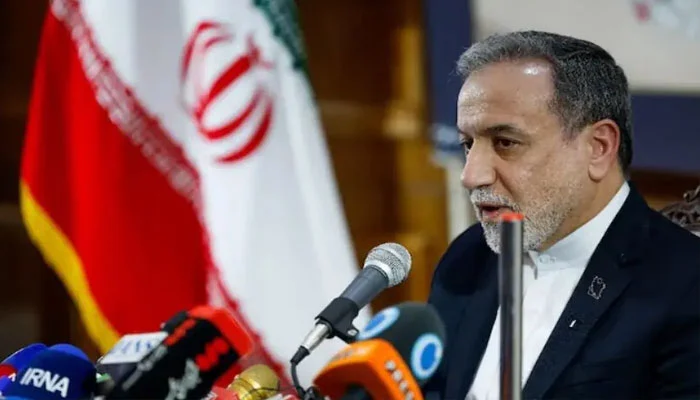
TEHRAN / BEIJING (AFP / News Desk) – Iranian Foreign Minister Abbas Araghchi stated that Tehran places no trust in the United States, clarifying that Pakistan’s diplomatic mediation has not failed but is currently plagued by severe difficulties caused entirely by Washington’s attitude.
Speaking on the sidelines of the BRICS Foreign Ministers’ meeting in New Delhi, Araghchi emphasized that every aspect of a potential agreement must be explicitly clear before any deal is finalized. He declared that Iran remains fully prepared for both negotiations and war, while concurrently prompting India to decisively choose the nature of its future bilateral relationship with Iran.
In a contrasting development, U.S. President Donald Trump claimed he only agreed to the ceasefire with Iran as a “favor” at Pakistan’s request, despite his personal reservations. While praising Pakistanis as “fantastic people,” Trump voiced mounting impatience with Tehran, warning that he will no longer tolerate stalling and that Iran must finalize a deal.
Iran Ready for Both Defense and Diplomacy
Foreign Minister Araghchi harshly criticized Trump’s inconsistent foreign policy, noting that a lack of continuity—where one day’s tweet contradicts the next—has led Iran to deeply question true American intentions. Despite receiving fresh backchannel messages from Washington expressing a desire to maintain contact, Tehran remains highly skeptical.
“Iranians only understand the language of respect,” Araghchi told reporters. “What could not be achieved through military action cannot be won at the negotiating table. Iran has never initiated a war, but it will fiercely resist any external pressure.”
Araghchi also confirmed ongoing talks with Russian officials regarding Moscow’s offer to transfer enriched uranium. Conversely, he lauded Iran’s strategic partnership with Beijing, stating that Iran welcomes any diplomatic assistance from China, given its transparently good intentions.
Trump’s Ultimatums on Iran’s Nuclear Program and Sanctions
Speaking to reporters aboard Air Force One upon his return from China, President Trump revealed that Iran’s current proposals are completely unacceptable. While he voiced no objection to a 20-year suspension of Iran’s nuclear program, he maintained that the guarantees regarding uranium enrichment levels remain entirely unsatisfactory.
In a significant diplomatic move, Trump announced that he intends to lift sanctions on Chinese oil companies purchasing Iranian crude within the next few days. This decision aligns with broader trade dynamics, as Trump noted that China is set to purchase billions of dollars worth of American soybeans.
Strategic Stance on the Strait of Hormuz and Taiwan
The geopolitical gridlock also heavily involved China’s stance on regional stability:
The Strait of Hormuz: President Trump noted that Chinese President Xi Jinping firmly believes Iran should not possess nuclear weapons and strongly advocates for the immediate reopening of the Strait of Hormuz. Beijing has given no indication of direct intervention in the strait but urges an immediate, comprehensive ceasefire to restore global economic stability.
The Taiwan Dilemma: In an unexpected twist, Trump issued a stern warning against Taiwan declaring formal independence, stating he strongly opposes such a move. When questioned on whether the U.S. would defend Taiwan in the event of a Chinese military assault, Trump stated he refused to give President Xi a definitive answer. “Only one person knows the answer to that, and that’s me,” Trump asserted.
Meanwhile, Beijing has officially urged both Tehran and Washington to resolve their deep-seated disputes through dialogue, emphasizing that a swift and sustainable resolution is vital not just for the immediate parties, but for the economic and strategic stability of the entire world.